
More hair in the shower drain can send you straight to the supplement aisle. But choosing a bottle before understanding the problem can waste time and money.
The best supplements for hair match your nutritional needs, have relevant clinical research, and fit your health history. A longer ingredient list does not necessarily mean better results.
Start by identifying why your hair is changing. Then compare the evidence, ingredients, and safety precautions. Here’s how to make that decision and where Viviscal Pro, available through DBM Aesthetics, may fit.
What You’ll Learn
- When a hair supplement may help and when you need medical evaluation.
- How to assess ingredients, clinical studies, and product quality.
- What to know about Viviscal Pro’s research and precautions.
- How to track progress without expecting overnight results.
Start With the Cause of Your Hair Loss

Hair shedding, gradual thinning, and breakage can look similar. Understanding the difference helps you choose an appropriate next step.
Hair Shedding, Pattern Hair Loss, and Breakage
Increased shedding may follow illness, significant stress, rapid weight loss, or medication changes. Pattern hair loss usually develops gradually. Breakage affects the hair shaft and can leave short, uneven strands after repeated heat styling, chemical processing, or tension.
These problems need different approaches. A supplement cannot correct every cause of hair thinning, and better nutrition alone may not address a hereditary or inflammatory condition.
When to Get Your Hair and Scalp Checked
Book an evaluation if you notice sudden loss, bald patches, persistent shedding, scalp pain, redness, or scaling. Your clinician can examine your scalp and review your diet, medications, and recent health changes.
The American Academy of Dermatology explains that clinicians may recommend supplements when testing identifies inadequate biotin, iron, or zinc. Testing should follow your history and symptoms rather than a standard shopping list.
Check the Evidence Behind Hair Growth Supplements
Once you understand your concern, ask whether the product’s research applies to your situation.
Look for Studies of the Complete Formula
An ingredient can support normal body functions without proving that a supplement produces thicker hair. Research on biotin alone, for example, cannot establish the effectiveness of every formula containing it.
Look for human studies of the specific product. Compare the studied dosage, formulation, participants, and duration with the product you plan to take.
Separate Measured Results From Marketing
Hair count, hair thickness, shedding, and satisfaction measure different outcomes. An improvement in one does not automatically establish an improvement in all four.
Randomized, placebo-controlled trials provide stronger evidence than testimonials alone. Still, check sample size, funding, participant exclusions, and follow-up. A positive study does not guarantee visible hair regrowth for everyone.
Best Vitamins for Hair: Match Ingredients to Your Needs

The best vitamins for hair growth depend on what your body needs. Taking more of a nutrient does not automatically help your hair grow.
Biotin, Iron, Zinc, and Vitamin D
Biotin, a B vitamin, appears in many hair growth products. However, the National Institutes of Health reports limited evidence supporting its use for hair concerns and notes that deficiency is rare.
Iron, zinc, and vitamin D also deserve individual assessment. Correcting a deficiency differs from adding nutrients when your intake already meets your needs. Avoid choosing doses based on the idea that “extra” means better.
Marine Complexes and Botanical Ingredients
Some hair supplements combine marine-derived compounds with botanical extracts. Evaluate the complete formula and its research rather than assuming that products with similar ingredients work equally well.
Use this comparison to guide questions, rather than rank ingredients.
| Ingredient | Why it appears in hair supplements | What to check | Main consideration |
|---|---|---|---|
| Biotin | Supports normal nutrient metabolism | Evidence of deficiency and relevant research | Extra intake does not guarantee growth |
| Iron | Supports oxygen transport | Clinician assessment and appropriate testing | Unnecessary intake and overdose risk |
| Zinc | Supports normal cellular functions | Nutritional need and total intake | Overlapping supplements |
| Vitamin D | Supports normal body functions | Whether supplementation is appropriate | No guaranteed hair benefit |
| Marine complexes | Supply marine-derived compounds | Studies of the exact formula | Fish and shellfish allergies |
| Botanical extracts | Provide plant-derived compounds | Studied extract, amount, and formulation | Interactions and product differences |
Read the Label Before Choosing a Hair Supplement
A product’s packaging should help you understand what you take and how to use it.
Read the complete Supplement Facts panel, not just the ingredients highlighted on the front. Check nutrient amounts, serving size, allergens, additional ingredients, and directions.
Ask the supplier for documentation supporting manufacturing and testing claims. Product identity, purity, potency, and contaminant testing matter. Verify independent certification for the exact supplement before relying on a logo.
The FDA does not approve dietary supplements before marketing. A supplier’s medical device credentials or manufacturing standards do not establish FDA approval or prove that a supplement improves hair growth.
Review Safety Before Starting Vitamins and Supplements for Hair
Even a product with relevant research needs a personal safety check.
Check Allergies and Overlapping Nutrients
Review pregnancy precautions, age restrictions, and ingredient allergies. Drug-free does not mean suitable for everyone.
Bring your medication and supplement list to your clinician or pharmacist. Multivitamins, hair formulas, and other products can contain the same nutrients. Combining them may add unnecessary amounts.
Tell Your Clinician About Biotin Before Blood Tests
Biotin can interfere with certain laboratory tests. The FDA warns that it can cause incorrect results, including falsely low results in some troponin tests used to assess heart injury.
Tell your clinician and laboratory what you take. Follow their test-specific instructions rather than choosing a stopping interval yourself.
Where Viviscal Pro Fits Into Hair Support
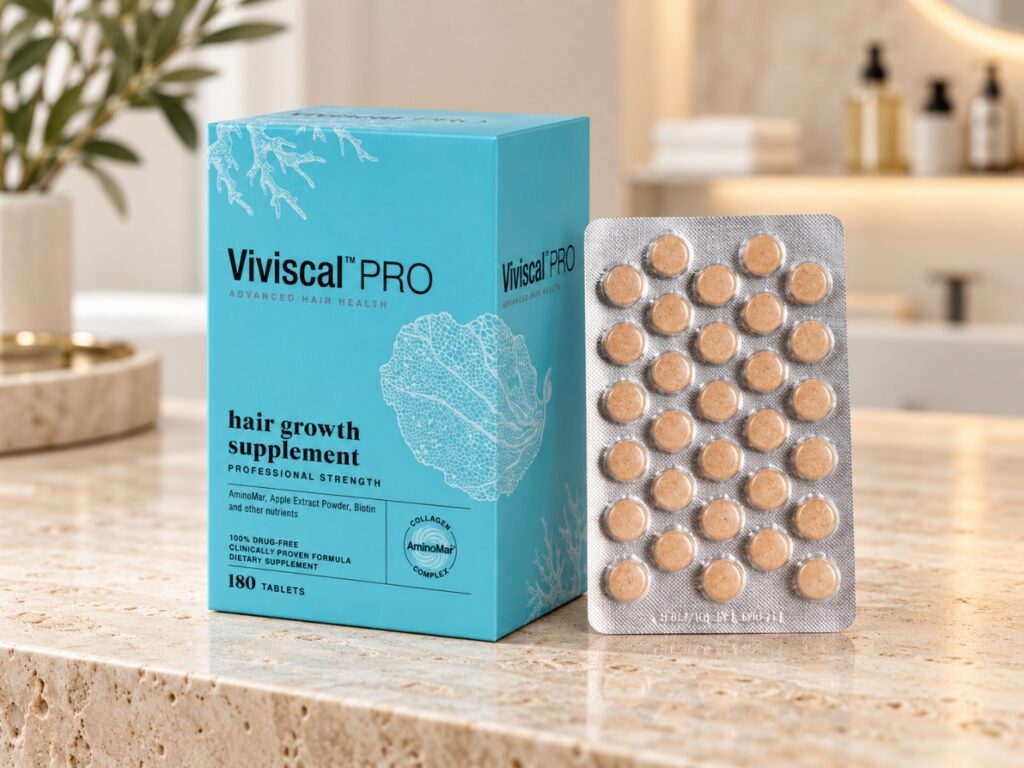
Viviscal Pro offers one formula to assess using the same standards: relevant evidence, transparent ingredients, and personal suitability.
Ingredients and Clinical Findings
DBM Aesthetics, Dongbang Medical’s U.S. subsidiary and distribution platform, offers Viviscal Pro Dietary Supplement. Its highlighted ingredients include AminoMar™, apple extract powder, and biotin in a drug-free formula.
A six-month randomized, placebo-controlled trial evaluated Viviscal Professional Strength in women with self-perceived thinning hair. Researchers reported improvements in measured hair counts and hair diameter. The study did not evaluate androgenetic alopecia, so it cannot establish effectiveness for pattern hair loss.
Keep these findings separate from research on Viviscal Man or Extra Strength. DBM also cites 10 publications and more than 25 years of clinical research. That history provides context, but you still need to examine which studies support each claim and formulation.
Who Should Avoid Viviscal Pro?
Viviscal Pro is not intended for:
- People under 18.
- Pregnant or nursing women.
- Anyone with fish, seafood, or shellfish allergies.
Consult your healthcare professional before use if you take medication.
Keep this iron-containing product away from children. Warning: Accidental iron overdose can cause fatal poisoning, especially in children under six. Contact a doctor or poison control center immediately after an accidental overdose.
These statements have not been evaluated by the Food and Drug Administration. This product is not intended to diagnose, treat, cure, or prevent any disease.
Follow the Directions and Compare the Full Cost
A suitable product also needs to fit your routine and budget.
DBM lists one Viviscal Pro tablet twice daily, with water after a meal, for three to six months. Do not exceed the recommended intake. Follow the current package directions and your clinician’s advice.
At that dosage, 60 tablets provide 30 days and 180 tablets provide 90 days. DBM also offers a 12-box case configuration for the 60-tablet product. Compare cost per daily serving and the planned course, rather than bottle price alone.
Store tablets somewhere dry, away from excessive heat and children. Do not use tablets from damaged blister seals.
Track Changes in Hair Without Guesswork
Consistent records help you assess progress more fairly than checking the mirror every morning.
Take baseline photographs using the same lighting, angle, hairstyle, and part. Track shedding, breakage, and visible fullness separately. A new haircut or different styling can change how dense your hair appears.
Review progress with your clinician during the recommended three-to-six-month period. That timeframe offers a review window, not a promise. Seek earlier advice for worsening hair loss, scalp symptoms, or a suspected reaction.
Frequently Asked Questions About Hair Supplements
These answers address common questions before you start a supplement.
1. What Is the Best Supplement for Thinning Hair?
No supplement suits everyone. Your diagnosis, nutritional needs, health history, and the product’s evidence should guide your choice.
2. Does Biotin Help With Hair Growth Without a Deficiency?
Evidence supporting additional growth without biotin deficiency remains limited. Larger doses do not establish greater benefit.
3. How Long Should You Take Viviscal Pro Before Reviewing Results?
Its directions recommend three to six months. Review progress with your clinician and seek earlier advice if symptoms worsen.
4. Can You Combine Hair Supplements With Hair Loss Treatment?
Sometimes, but ask your clinician first. They should review medications, overlapping nutrients, and whether the combination suits your diagnosis.
5. Can a Hair Supplement Replace Medical Treatment?
A supplement should not replace treatment for a diagnosed condition. Your clinician can explain which treatment options address the cause of your hair loss.
Choose Hair Support That Fits Your Needs
The best supplements for hair match a clear need, credible evidence, and an appropriate safety profile. Start with the cause of your concern, then assess the formula and track your response.
Viviscal Pro is an option to discuss with your healthcare professional. Review DBM Aesthetics’ Viviscal Pro product information for directions, precautions, and provider ordering options.